

Art at our School
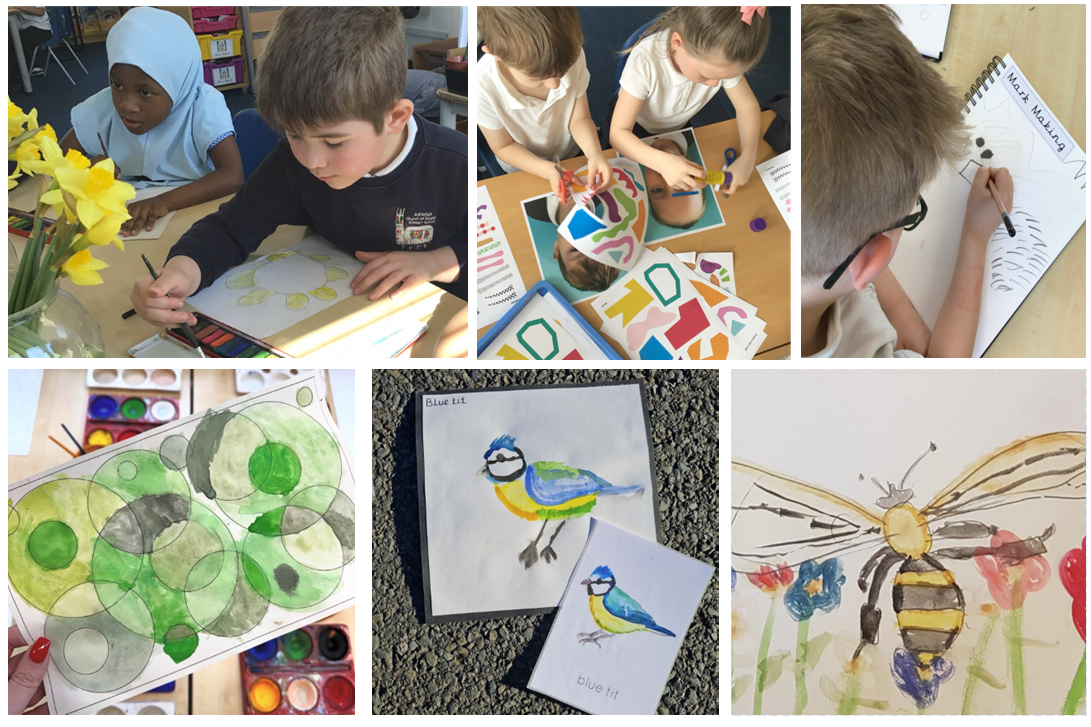 At our school, Art is a joyful and expressive part of our broad and balanced curriculum. From Early Years through to Year 6, children are encouraged to explore their creativity with curiosity, confidence and imagination. Through drawing, painting, sculpture and printing, pupils learn to express ideas, experiment with materials and appreciate the beauty of artistic creation.
In the Early Years, children begin by exploring colour, shape and texture through sensory-rich experiences. They explore the magic of colour mixing with paint, discovering how primary colours blend to create secondary colours. Alongside this, they experiment with printing, collages, and simple self‑portraits, helping them develop fine motor skills and understand that their artwork holds meaning and value.
In Key Stage 1, pupils begin to refine their artistic skills through purposeful mark making, exploring how different drawing tools and mediums can be used to create line, shape and pattern. They use the work of Kandinsky and Mondrian as inspiration, experimenting with bold lines, geometric shapes and expressive colour choices. Alongside this, they create vibrant Kandinsky‑style circle art, explore pattern and detail in Henri Rousseau-inspired jungle scenes, and develop clay skills through pinch‑pot creatures. These projects help children recognise how artists express themselves and encourage them to take pride in developing control over their tools and materials.
In Key Stage 2, children deepen their skills and develop greater independence as artists.
In Years 3 and 4, pupils explore a wide range of artistic movements, broadening their understanding of style, technique and visual communication. They study the Pop Art movement, creating bold, eye‑catching prints inspired by artists such as Andy Warhol and Roy Lichtenstein; explore the decorative, nature‑inspired patterns of William Morris; and experiment with Pointillism, discovering how tiny dots of colour can blend to create shading, depth and form. These projects help pupils build control, patience and observational skill while giving them opportunities to express themselves in new and exciting ways.
By Years 5 and 6, pupils broaden their understanding even further as they study more complex themes and techniques. They consider the work of artists who express significant or challenging events through art, exploring how visual language can communicate emotion, perspective and lived experience. As part of this, children study the work of Paul Nash, reflecting on how remembrance is portrayed through symbolic landscapes, thoughtful composition and powerful imagery, and learn how to respond with sensitivity and respect.
Alongside this, they explore the atmospheric brushwork and shifting light of Monet and the Impressionists, learning how colour and movement can capture a moment in time. Pupils also delve into the complexities of Leonardo da Vinci, considering his mastery of technique, his detailed observational drawings and his ability to blend art with scientific curiosity. Through these studies, children deepen both their technical skill and their appreciation of how artists communicate ideas across cultures and centuries.
Across all stages, Art enables children to express themselves, celebrate individuality and recognise creativity in the world around them. Through inspiring lessons, hands‑on exploration, artist studies and opportunities to exhibit their work, we aim to nurture confident, reflective and imaginative young artists who value their own creativity and appreciate the creativity of others.
Art Overview